




Quick answer: Geyser repair in Midrand - element, thermostat, pressure relief valve or flange work - commonly costs R3,500-R4,500 including parts and labour. A full geyser replacement costs R5,000-R15,000 including the unit, labour and materials (labour-only R2,500-R2,900). Replacement is notifiable work: it requires City of Johannesburg plan approval and a COC from a PIRB-registered plumber.
The geyser is South Africa's most repaired plumbing item, and the one household appliance where the stakes are genuinely high: 100-200 litres at 60 degrees, stored above your bathroom ceiling, running on the same grid that load-sheds. This guide covers the fault patterns, the costs, the compliance layer and the repair-versus-replace arithmetic.
Geyser anatomy: the five components that actually fail
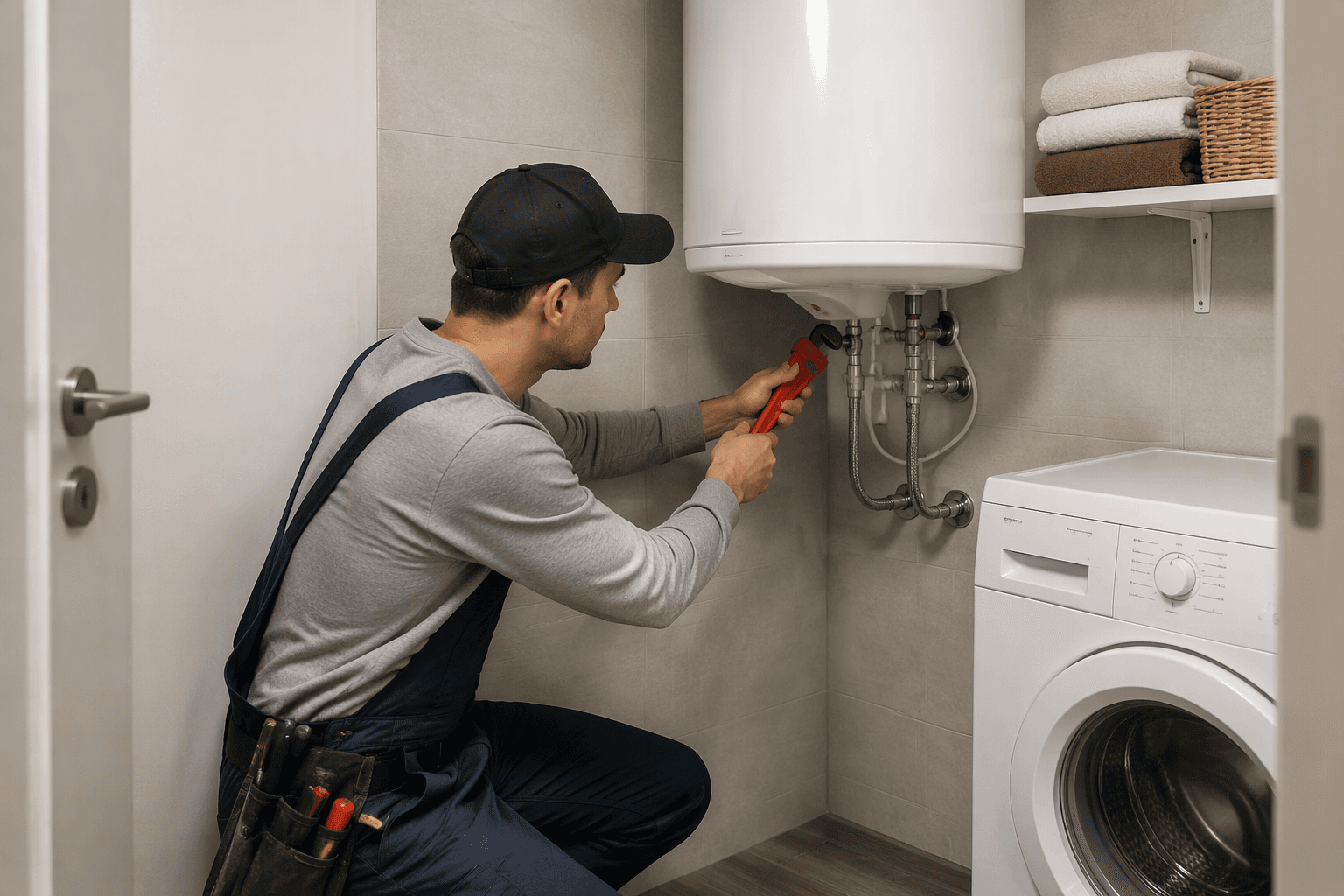
Every geyser call-out resolves to one of five components, and knowing the map is what lets you follow the diagnosis instead of watching it. The element is the heater at the bottom: it scales over years in hard water until it cannot move heat, and the failure signature is gradual - hot water getting colder for a month, then the board tripping. The thermostat is the controller: its failure signatures are the pilot light on with cold water, or a unit that overheats and dumps at the relief valve. The pressure relief valve is the safety component that should vent nothing under normal conditions; a steady drip from it signals a pressure-side problem, not a tired valve, and it is the part inspectors look for first on a new install. The flange and gasket are the joint where the element meets the tank - where most geyser leaks start, because the gasket compresses, dries out and weeps, and the drip at the top becomes the ceiling leak downstairs. The tank itself - the lining and the steel - is the component that cannot be repaired: corrosion and years of thermal cycling do their work, and when the tank is the fault, every other repair is a delay on the replacement. This is why a professional's diagnosis touches all five in a system check - element resistance, thermostat behaviour, PRV test, earthing, and the flange - before pricing a single part: a quote for one component on a unit where the tank has quietly failed is the most expensive part of the visit.
The classic failure modes
- Element or thermostat fault - the most common call-out: the board trips, the hot water stops halfway, or the pilot light stays on while the water stays cold. Element failure is gradual - it scales over years until it cannot heat - so the "getting colder for a month" geyser is a failed element waiting to trip the board. Published range: R3,500-R4,500, parts and labour included.
- Flange or base-plate leak - the gasket compresses, dries out and weeps; a drip at the top becomes a ceiling leak or a water-damage claim. A wet patch under the geyser means switching it off at the distribution board immediately.
- Complete failure - a corroded tank lining (hard water plus years of thermal cycling) is past the repair line; no hot water at all, or a sound like a boiling kettle, means replacement is the honest quote.
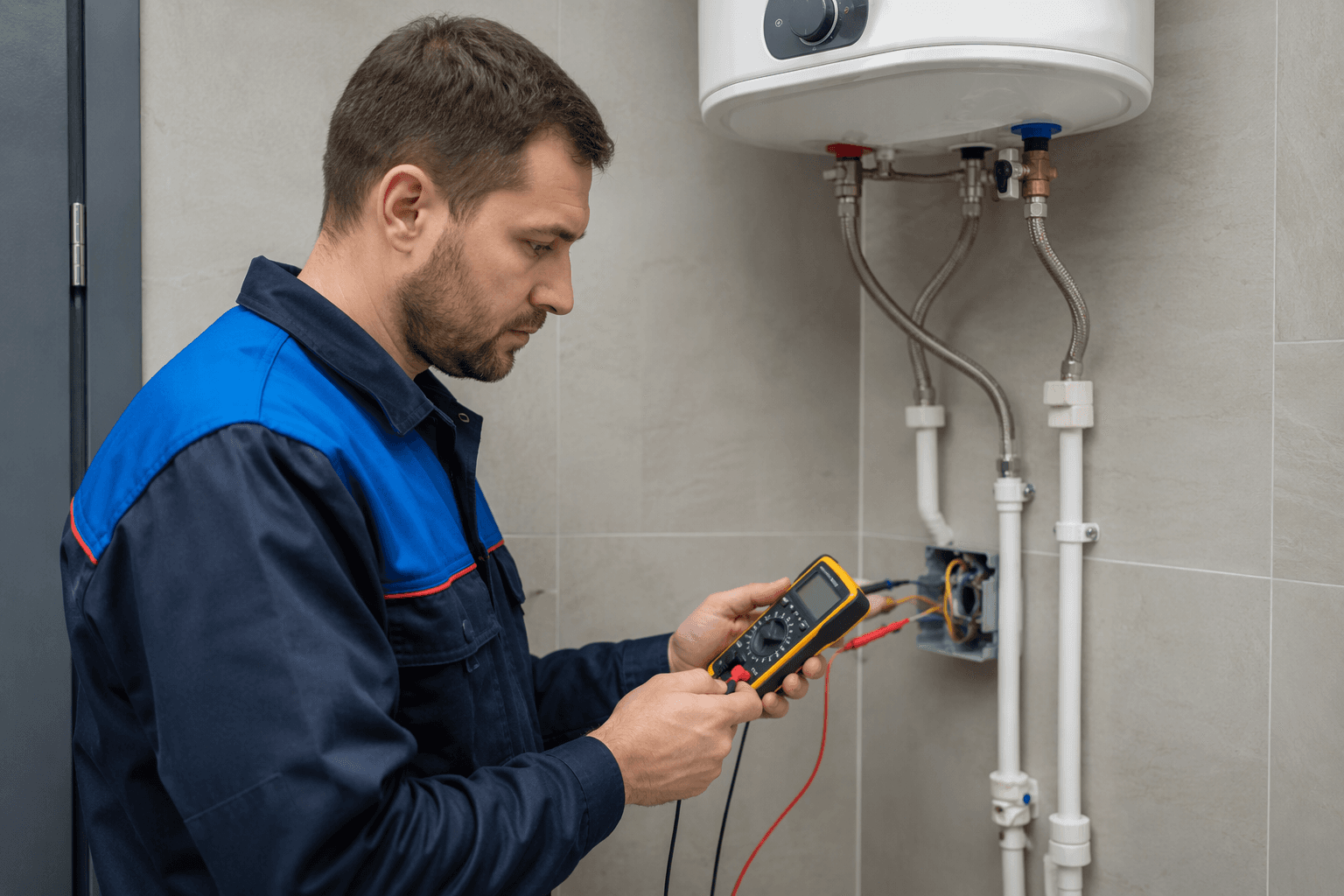
- PRV and earthing - a pressure relief valve that drips steadily signals a pressure-side problem, not a tired valve; a faint shock at the tap is an earthing defect a professional tests with a multimeter, not a guess.
Can load-shedding damage a geyser?
Yes. Every power cycle is a thermal shock - the element heats, cools, reheats - and the voltage sag at restoration is when thermostats and contactors fail. The pattern to recognise: misbehaviour starting during or right after shedding - uneven heating, random trips, short hot-water windows. The correct response is a full-system check (element resistance, thermostat, PRV, earthing, isolator) rather than swapping one part and hoping - for an eight-year-old unit in a heavy-shedding suburb, the annual check is the insurance policy cheaper than the 2 a.m. call-out. If an inverter runs the geyser circuit, have the installer and the plumber agree who owns that interaction.
How long a geyser lasts - and what shortens it
The design life of a standard electric geyser is 8-12 years, and the factors that move a unit toward either end are all visible if you know where to look. Water quality is the big one: Midrand's supply scales the element and the tank lining, and the scaling that takes a soft-water unit a decade can cut the effective heating surface of a hard-water unit roughly in half - the "getting colder" pattern is the element losing its ability to move heat through the scale. Load-shedding adds a distinctly local stress: every restoration works the element at full load, and the voltage sag at the moment of power return is where thermostats and contactors fail - which is why geyser failures cluster around the heavier shedding phases, and why units in the city's heavy-shedding suburbs fail young. Usage matters more than the label: a household that runs two en-suites in sequence is working a 150L tank like a 200L one, and sizing for the average day instead of the morning rush is where the element and the thermostat take the extra load. The safety components quietly shorten life too: a relief valve that is not venting properly holds excess pressure in the tank, and an earthing fault nobody has tested is both a shock risk and an indicator of a system drifting out of spec. The practical read: a unit showing two or more early-warning signs - uneven heating, random trips, flange weeping, a continuous PRV drip - on an eight-year-old tank in a heavy-shedding suburb is a replacement conversation, not a repair one, and the difference between booking that conversation at a convenient time and discovering it at 2 a.m. is the annual system check, priced inside the standard repair range.
Repair vs replacement: the costs
- Repair (element, thermostat, flange/gasket, PRV): R3,500-R4,500, part-dependent - the gasket is cheap; the labour and isolation dominate.
- Full replacement (unit + labour + materials): R5,000-R15,000 - standard 100L/150L electric at the bottom, 200L and large-capacity at the top, solar above the range.
- Labour-only installation (you supply the unit): around R2,500-R2,900.
- Diagnosis / system check: inside the published hourly range (R400-R900, ~R600 average) or bundled into the repair visit - confirm which before the van leaves.
The arithmetic, done honestly: a repair at R3,500-R4,500 on a geyser well past its 8-12 year design life is often the cheaper long-term path to replacement at R5,000-R15,000 - done properly with permit and COC, so the next failure is not also your insurance claim. A standard replacement is a single-day on-site job (isolation, removal, new unit, pressure test, commissioning) once plan approval is in hand; a professional will do this arithmetic with you at the flange, and an improviser will sell you the element and the second call-out in eight months.
Choosing the right replacement
Three decisions make or break the purchase. Capacity: 100L for one to two people, 150L the family standard, 200L+ for large homes or en-suites running in sequence - size for the morning rush, not the average day, and upgrade capacity while the connections are already open, when it is the cheapest it will ever be. Certification: the unit must carry the SABS mark - an uncertified unit is how a R5,000 purchase becomes a declined insurance claim. Solar: a solar geyser on a north-facing roof sits above the R5,000-R15,000 range and pays back through the heating bill - the decision is your roof angle, your load profile and your budget. A professional quote prices both options at your capacity, so the choice is made on your numbers.
The replacement day, step by step
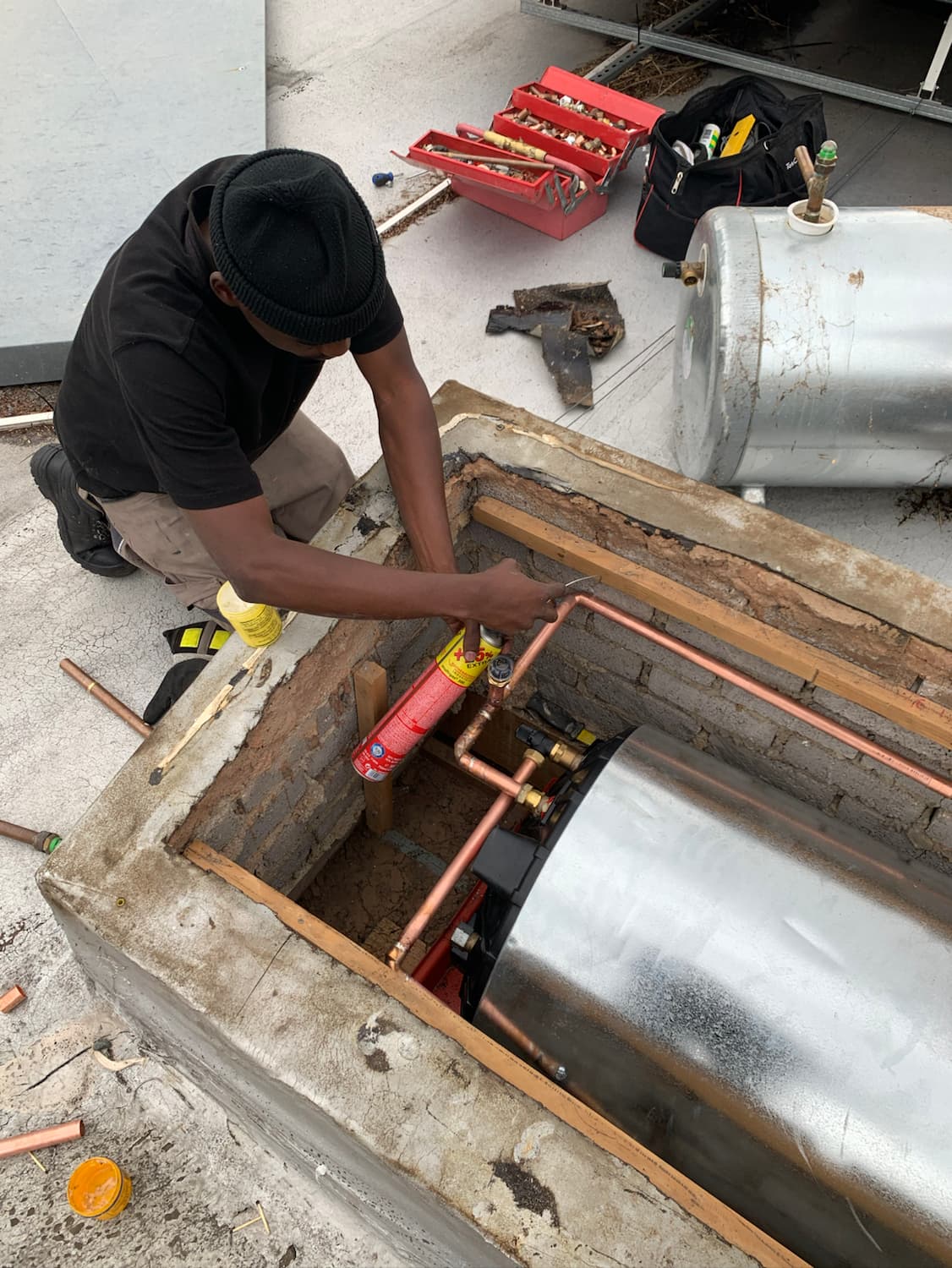
A standard like-for-capacity replacement is a single-day on-site job, and knowing the sequence is what turns the plan-approval timeline from a mystery into a schedule. Morning: isolation and removal. The geyser is off at the distribution board, the cold feed is closed, and the tank is drained - a 200L unit is 200 litres of water that has to go somewhere, so the drainage plan is made before the flange comes off - and the old unit, connections and flange are removed. Midday: the new unit and connections. The tank goes up, the flange and gasket are new, the element, thermostat and relief valve are fitted, the pressure-limiting valve and shut-off isolation are in place, and the earthing is checked - these are the components the inspector verifies on a compliant install, and a professional fits them in the same visit the tank is installed. Afternoon: pressure test and commissioning. The system is tested under real pressure before the van leaves, the board is reset, the first tank fills, and the unit is commissioned with the hot-water run that proves the element, the thermostat and the relief valve all work together. The paperwork. The Notice of Completion enters the City of Johannesburg process, the inspection is scheduled - commonly two to four weeks for the turnaround - and the COC follows the passed inspection, issued by the PIRB-registered plumber only. Two practical notes: schedule the day so your hot-water commitments sit after the afternoon, and keep the geyser cupboard clear the night before - the visit you are paying for should not add time to itself because the tools had to be found.
Compliance protects your insurance claim
The sentence that reframes the whole purchase: South African short-term insurers exclude water damage arising from non-compliant installations. Geyser replacement is notifiable work - City of Johannesburg plan approval through the JDA e-building portal, installation to SANS standards, and a COC from a PIRB-registered plumber. A geyser that bursts from an unpermitted, uncertified install is the textbook declined claim - even when you did not commission the original work, because the exclusion follows the installation, not the owner. At quote time, ask two things: are you PIRB-registered (verify the number at pirb.co.za in two minutes) and is the COC included in the price? Both answers should be immediate - they are the entire defence, and they cost nothing.
While you wait for the repair
- Switch the geyser off at the distribution board - the dedicated two-pole breaker.
- Close the cold-water feed at the tank where safely possible - it stops a flange leak from refilling a failing tank.
- Protect and photograph - towels under the drip, valuables moved, photos of the wet patch before cleanup. Your insurer will want exactly these; the full shutdown protocol is in the emergency guide.
How this guide was researched
This guide was compiled by the directory's research team from public sources accessed on 30 September 2026 and reviewed against the standards the claims depend on: PIRB registration and the public register, SANS 10400-H, SANS 10256 and the SABS certification mark, the City of Johannesburg's building-permit process, and the published geyser price benchmarks. Every price in it is a published benchmark or a provider-published figure - none were invented, and the solar and large-capacity categories with no published benchmark are left above the range rather than guessed at. The directory is independently operated, with no affiliation to any listed provider, and the pay-per-lead model means no operator can buy a position in it. If a fact here does not match what you see on the ground, the correction belongs with the sources, not with the narrative - and that is a check you can run yourself using the links below.
Sources & references
Accessed 30 September 2026. Price figures are the published benchmarks cited in this guide.
- Published geyser installation labour costs (ProCompare)
- Geyser replacement cost guide (Plumber Price List)
- A Midrand operator publishing geyser pricing
- A local geyser repair guide covering load-shedding failure patterns
- SANS 10400-H and 10256 plumbing standards (SABS)
- The PIRB public register, for the two-minute check
- City of Johannesburg - building plan approval
Water damage compounds by the hour, which is why Midrand's 24/7 operators treat geyser call-outs as top priority. Use the directory's 24/7 filter, send the request with photos, and the quotes come back itemised - repair or replace, with the compliance package stated, on one screen. That is how geyser repair in Midrand is supposed to be chosen: on the numbers, in writing, before the ceiling is involved.