




Quick answer: To hire reliable plumbers in Midrand: verify PIRB registration at pirb.co.za (under two minutes), get 3-5 itemised written quotes, sanity-check them against the published R400-R900/hour benchmark (average around R600), and confirm a written 12-month workmanship warranty. For notifiable work like geyser replacement, make sure plan approval and the COC are included in the price.
Hiring the wrong plumber is one of the more expensive mistakes a Midrand homeowner can make: water damage compounds by the hour, non-compliant work can void an insurance claim, and an unregistered tradesperson cannot legally issue the certificate your next property transfer will demand. The good news is that the local market makes good choices easier than most: forty-four competing operators, published price benchmarks for the classic jobs, verbatim public reviews on every listing, and a public register that lets you check a plumber's standing in under two minutes. This is the practical playbook for using all of it - the steps, the questions, the red flags, and the paper trail that turns a trade job into an enforceable one.
The 7 steps to hire a plumber in Midrand
- Define the job in two sentences. What is broken, where, and since when - "geyser trips the DB board every evening" is enough for a professional to pre-diagnose; vague requests get vague quotes, and vague quotes are where price disputes are born.
- Shortlist from the directory. Filter by suburb, service and 24/7 availability, and read the verbatim public reviews before investing a minute in the conversation. Three to five operators is the sweet spot: enough to see the market's honest midpoints, few enough to compare without drowning.
- Verify PIRB registration in writing. Check the number on the public register - two minutes, and the single highest-value check in South African plumbing. For notifiable work it is not optional: the COC is only legally valid when issued by a registered plumber.
- Request itemised written quotes. Labour, materials and call-out fee on separate lines - itemisation is what makes two quotes comparable, and it is what the Consumer Protection Act expects you to be able to point to.
- Compare on three axes. All-in price with its conditions, response time in writing, and track record. The cheapest quote that cannot tell you when it will arrive is a gamble, not a bargain.
- Agree the terms before the van moves. Final number, time window, and what happens if the diagnosis changes on site - a "blocked drain" that proves to be a collapsed pipe is a different price, and a scope change should produce a new quote with your explicit go-ahead.
- Inspect, photograph, collect the documents. The tax invoice, the written warranty (12 months on labour is the baseline to expect) and, for notifiable work, the COC - filed with your property documents before the van leaves.
What Midrand plumbing actually costs
Quotes only make sense against the published benchmarks, so here is the frame. A plumber's time runs R400-R900 per hour, with the published average around R600. Emergency call-outs bill at R600-R1,300 per hour at night and on weekends - and at least one Midrand operator publishes a flat R350 call-out fee, which is a useful anchor when you ask about the fee structure. The classic jobs quote fixed, all-in: minor tap repairs R500-R800, geyser element or thermostat repair R3,500-R4,500, full geyser replacement R5,000-R15,000 including unit, labour and materials, blocked drain clearing R500-R1,500 depending on severity and method, and non-invasive leak detection billed by the hour at around R600. Recent published Midrand jobs also show a toilet repair at about R1,200 and a bathroom wet-area job at about R9,500. None of these are quotes - they are the comparison frame that tells you when a number is plausible, cheap in the wrong way, or rich without justification. The line-by-line version, with what pushes each range up or down, is the price guide for the Midrand market.
Hourly or fixed: which protects you
Both models are common in Midrand, and the protection comes from the conditions, not the model. On hourly work, confirm the rate in writing before the clock starts and ask explicitly whether the emergency rate applies - the standard and the night/weekend bands are different, and the difference on a three-hour job is material. On fixed, all-in work, the rule is that the price stays fixed for the agreed scope: a change of scope is a new quote with your go-ahead, never a line item you discover at the end. Diagnostic-heavy, open-ended work - a concealed leak, a fault nobody can see - leans hourly or metered (leak detection bills around R600/hour), because the honest price genuinely cannot be known in advance; a known, scoped job (a tap, a drain, an element) is where fixed pricing should be sharpest. Whatever the model, the invoice should match the accepted quote line for line, and that document is your leverage under the Consumer Protection Act if the work is substandard.
The questions that separate professionals from improvisers
- "What's your PIRB registration number?" An immediate, unprompted answer - or a polite refusal that answers everything. Some businesses also carry IOPSA membership, the professional institute; it is a fine signal, but PIRB is the one that carries the legal weight.
- "Is the call-out fee included, and deducted from the final invoice?" Practices vary (a flat R350 is published by one local operator; others advertise none) - get the answer in writing.
- "What hourly rate applies, and does it change after 17:00 or on weekends?" Your quote should sit inside a defensible part of the published R400-R900 standard and R600-R1,300 emergency ranges, with the conditions stated.
- "Is this job notifiable, and who handles plan approval and the COC?" A professional tells you which side of the line your job sits on, unprompted. If a geyser replacement quote does not mention the COC, ask - and keep asking.
- "What happens if you find something worse than I described?" You want: stop, show me, re-quote, my call. Not "we'll just fix it and add it to the invoice."
Red flags that should end the conversation
- No PIRB number, or one they "will check later." The register is public and the check takes two minutes; a plumber who resists has already told you everything you need to know.
- Refusal to itemise, or pressure to pay cash "just for today." No invoice means no warranty evidence and no recourse - the paper trail is the point of the exercise.
- "It's probably the X, R5,000, can you get the card ready?" Diagnosis before inspection is the core improviser move - inspect, diagnose, quote, in that order, every time.
- Reluctance to confirm the arrival window in writing. The published emergency benchmark is a ~60-minute target; a professional commits to a window, a ghost will not.
- A bottom line far below the published range. A geyser replacement quoted at R2,500 all-in against a published R5,000-R15,000 is a prediction of the second invoice, not a discount.
- Scope creep mid-visit without a fresh quote. The extra work is probably real - but it is still your decision, at a stated price, before the wrench turns.
Comparing quotes fairly
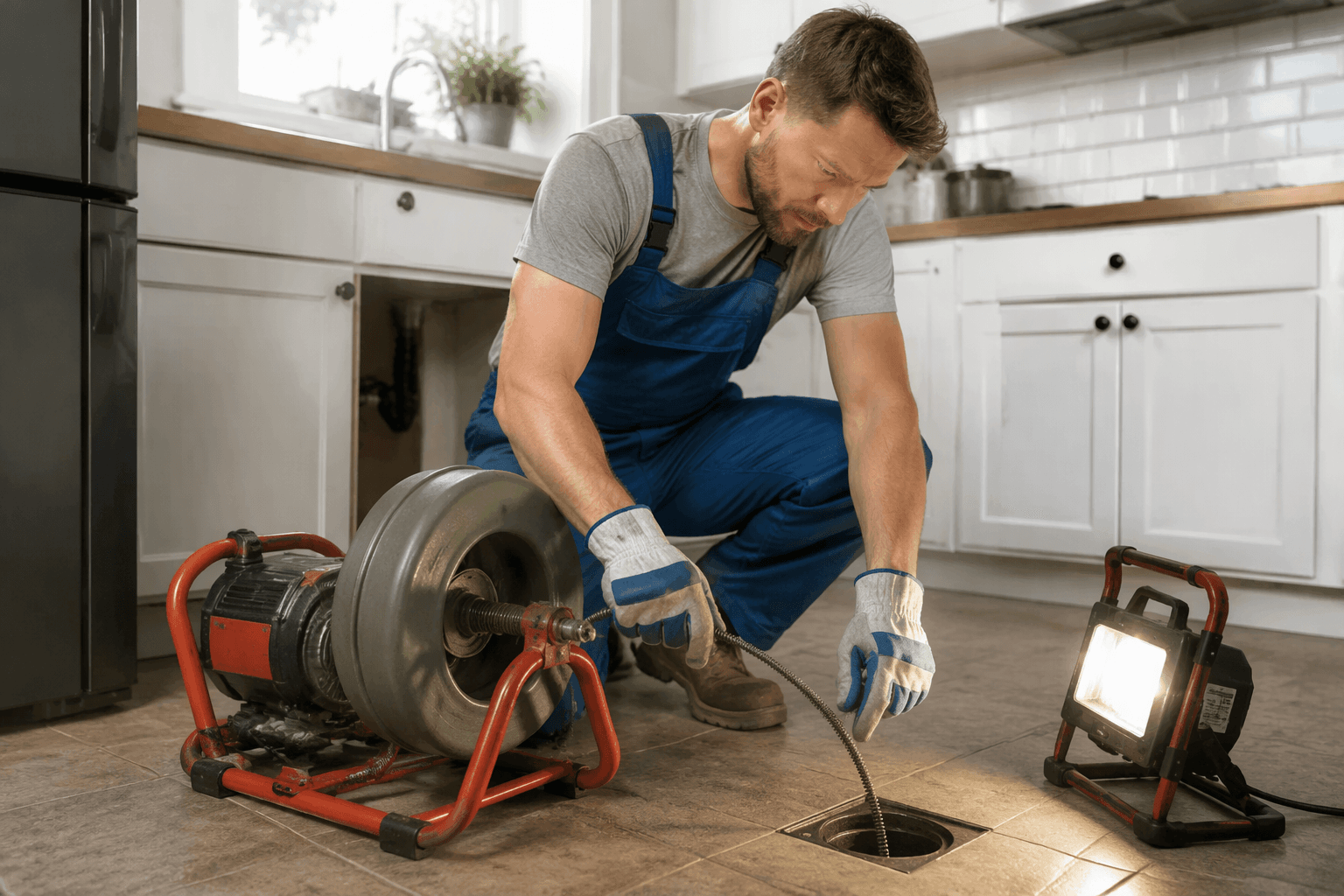
Lay the quotes side by side: same job, same line items - labour, materials, call-out, warranty, and the COC where the work is notifiable. Check each bottom line against the published benchmark for that job, and weigh the verbatim public reviews alongside the price: the reviews that mention arrival time and quote accuracy are the ones that predict the experience, while one-liners tell you little. This directory is built for exactly this step: one request, multiple itemised quotes, one screen. Two honest notes. First, the classic jobs run the same process at different weights: a leaky tap (R500-R800) follows the same 7 steps as a geyser replacement (R5,000-R15,000, notifiable, COC included) - only the compliance step changes size. Second, for a third recurring blockage in a year, insist on the CCTV camera inspection: the footage is what converts "jet it again" into a priced choice between root-cut, section replacement and relining.
The visit: from booking to invoice
Know what a professional visit looks like so deviations stand out. For an emergency you are booking the response, not the repair: the sequence is response, isolate, diagnose - and only then a repair price agreed with your go-ahead. For scheduled work the visit should start with the quote being read back to you, proceed to the work itself, and end with a walk-through of what was done, what was replaced, and the documents: itemised tax invoice, the written workmanship warranty, and the COC where applicable. Payment should follow the agreed terms - a deposit for a big ticket like a geyser unit is normal, but full prepayment for work that has not happened is not. Photograph the finished work yourself as well; two minutes now is faster evidence than a week of follow-up later. If the diagnosis changes on site, the stop-and-re-quote rule from step six applies exactly then - that moment, handled well, is the clearest test of the operator you just hired.
Working in estates and body corporates
Midrand is a city of gates. Send the gate code, unit number and a reachable contact with the quote request so the plumber reaches the right unit in one trip - and remember that gate access is what moves an emergency number in practice: the published 60-minute response target is a drive time, and an estate warden's phone call can add or remove ten minutes from it. For communal systems - shared drains, geyser plant rooms, estate mains - the body corporate is often the commissioning client, not the household: confirm who commissions the job before the quote, because it changes who signs, who pays, and which warranty applies. The body corporate's communal isolation valve may also be the only thing that stops a main-line leak, so the warden or on-call number is worth having written down in the calm. Ask your shortlist how they handle estate access at 2 a.m. - the fastest plumber is useless if the gate will not admit them, and established local operators have this worked out.
How this guide was researched
This guide was compiled by the directory's research team from public sources accessed on 30 September 2026 and reviewed against the standards the claims depend on: PIRB registration and the public register, the IOPSA professional body, SANS 10400-H and the plumbing codes published through SABS, the Consumer Protection Act 68 of 2008, and the City of Johannesburg's building-permit process. Every price in it is a published benchmark or a provider-published figure - none were invented, and the categories with no published benchmark are left without one. The directory is independently operated, with no affiliation to any listed provider, and the pay-per-lead model means no operator can buy a position in it. If a fact here does not match what you see on the ground, the correction belongs with the sources, not with the narrative - and that is a check you can run yourself using the links below.
Sources & references
Accessed 30 September 2026. Price figures are the published benchmarks cited in this guide.
- Published hourly rates for plumbers (ProCompare)
- Emergency call-out rates (ProCompare)
- A Midrand operator publishing a flat call-out fee
- A Gauteng plumbing cost guide (Fourways Plumber)
- The Consumer Protection Act, 68 of 2008
- The two-minute PIRB register check
- Local plumber listings on Infoisinfo
The end of a good plumbing job is the documents, not the finished work: the itemised tax invoice matching the accepted quote, the written warranty, and the COC where the job was notifiable. Read the reviews for patterns, not one-liners - three "arrived within the hour" comments are a pattern, and a 4-star complaint that says "they came back and fixed it" is worth more than five 5-star blurbs. Shortlist three to five operators from the directory, verify their registrations, and send one itemised-quote request to all of them - free, consent-based, compared on one screen. That is how you hire plumbers in Midrand without gambling.