



TL;DR
Solar geyser repairs in Midrand, 2026: the solar-specific fault list, costs R3,500-R4,500, post-outage surge damage, and when repair beats replacement.
A solar geyser that's "dead" usually isn't. In most of the solar calls I've taken over 18 years — and a lot of them here in Midrand, where solar is the default new-install unit — the failure is a thermostat, an element, a manifold joint or the controller, all of them in the repair column at R3,500–R4,500, not the replacement column at R5,000–R15,000. The solar side adds two things a standard geyser doesn't: the manifold (where the pressure damage shows up first) and the controller (which is the quiet culprit behind the "element always running" bill). This is the solar-specific fault map — what fails, what it costs in 2026, and the one Midrand trigger that causes a disproportionate share of the calls: the water outage. I'm Mike Fleming — 18 years in the trade, 17 in Midrand, 1,670+ jobs — and solar geysers are the unit I'd put in my own house, which is also the unit I know best from the repair side.
Written by Mike Fleming — 18 years in the plumbing trade, 17 of them working in Midrand. 1,670+ jobs completed, 21+ estate projects. Reviewed and approved by the midrandplumbers.co.za admin team · checked against the PIRB register, SANS 10400‑H and City of Johannesburg water regulations on 10 October 2026. Independently operated directory — no affiliation with listed providers.
How a solar geyser actually works (the 60-second version)
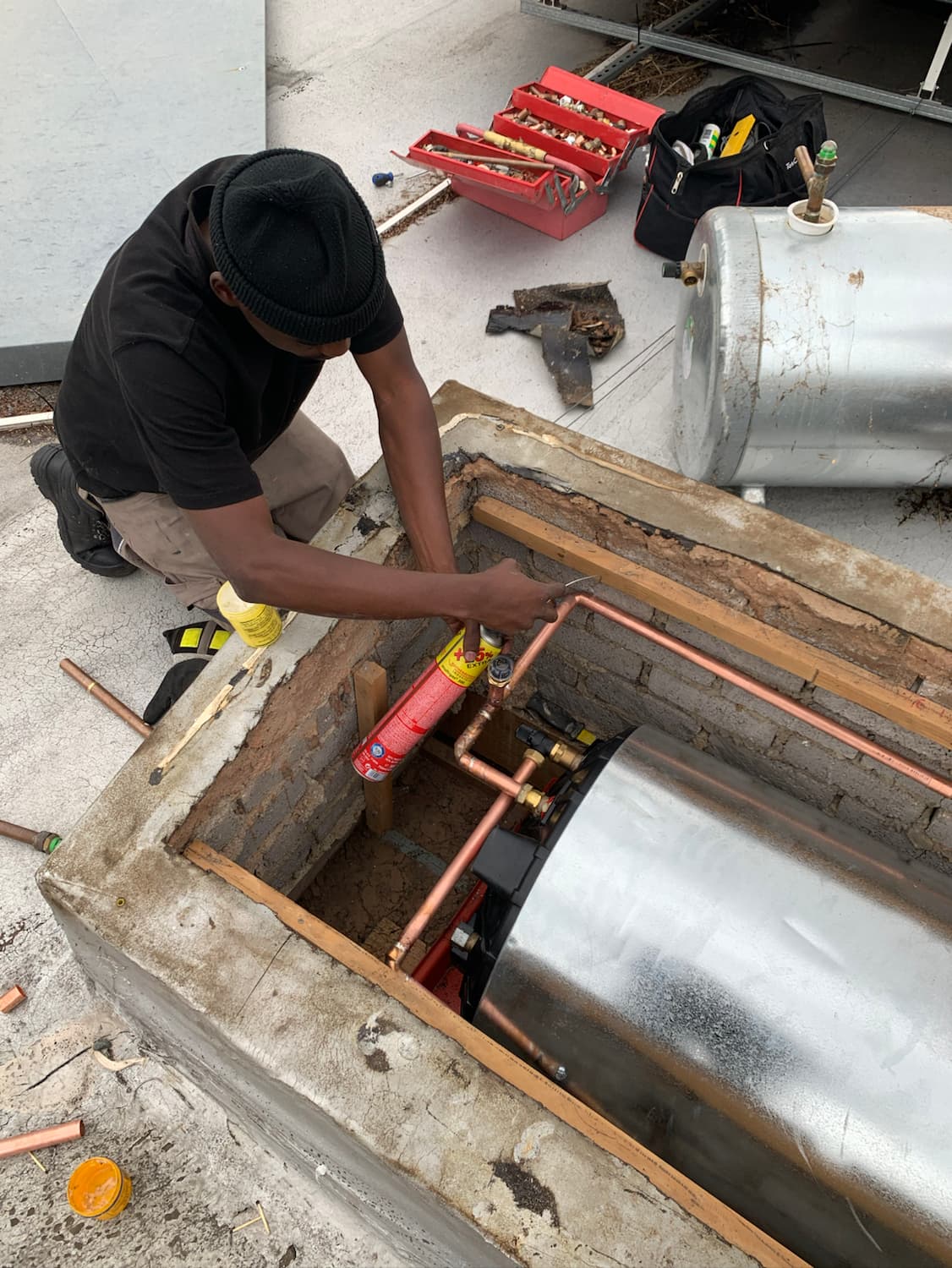
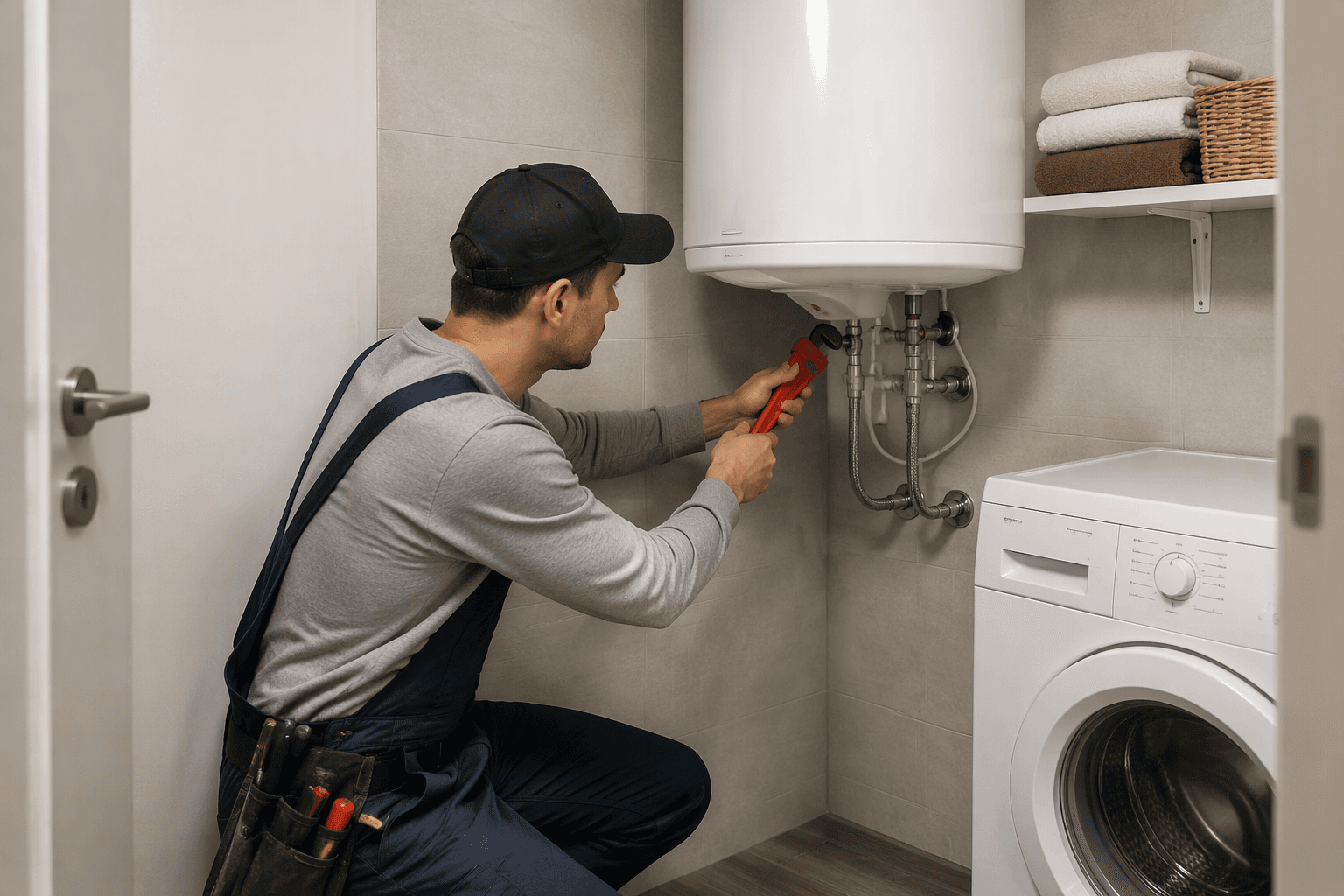
Before the fault list, the mechanism — because every solar repair is a consequence of it. The unit is a standard geyser (element + thermostat inside, pressure vessel) with two additions: a solar manifold (the flat-plate collectors on the roof, or the internal coil, which do the primary heating with the sun) and a controller that manages when the element runs as backup. In a healthy system the sun does most of the work and the element barely runs — which is the entire point of owning solar. The failure modes follow from that: when hot water goes weak, the question is always which layer failed — the solar side (manifold, coil, heat transfer) or the standard side (element, thermostat, controller, relief valve). The repair is cheaper and faster when the first visit finds the layer, and the directory's geyser providers are the ones to ask to name the layer before pricing it — and their answer to that one question is the first data point of your whole shortlist.
The solar fault list: what fails, and what it costs in 2026
| Symptom | Usual cause | 2026 cost |
|---|---|---|
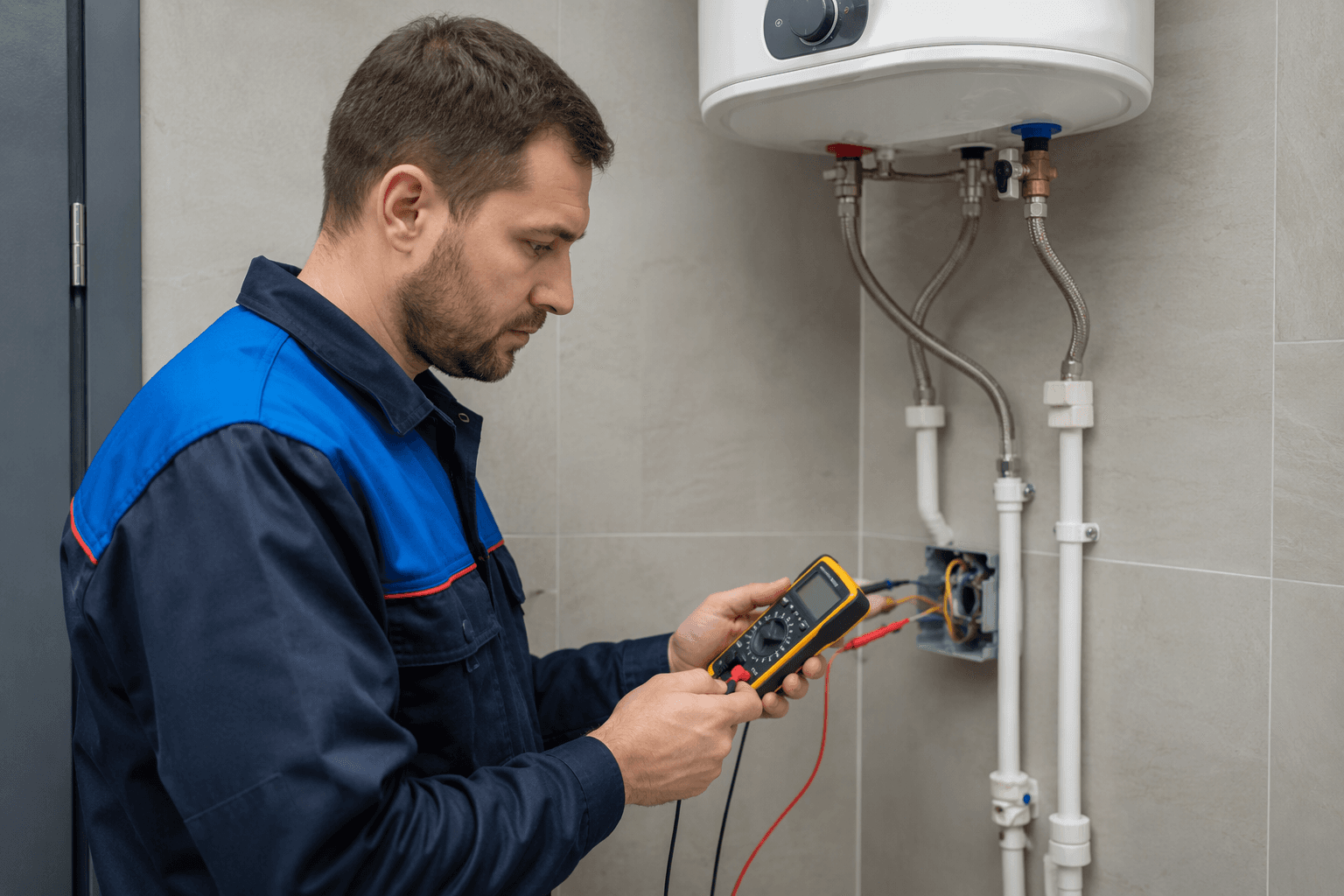
| Element running constantly, bill climbing | Thermostat or controller fault (the element never sees the sun's heat) | Inside the R3,500–R4,500 repair band — thermostat/controller part + labour |
| Hot water weak or never fully hot, but power's on | Element (failed or heavily scaled) or solar-side heat transfer (manifold/coil) | Element: repair band. Manifold-side: quoted per finding |
| Weeping/dripping at the manifold joint, especially after an outage | Pressure surge at water restoration (the ridge and high-pressure sides feel it first) | Joint replacement — van-stock part, one visit, repair band |
| Pressure relief valve dripping continuously | Over-pressure or a valve that's reached its life | Valve replacement — small part, labour is the cost |
| No hot water at all, element confirmed working | Solar-side failure (manifold, coil, pump where fitted) — or the thermostat cut-out | Quoted per finding; detection of the layer is the first step |
| Unit 10+ years old, repeated failures | Age: element, thermostat and joints failing in sequence | The replacement math — see below |
Two reading rules. First, the thermostat/controller is the quiet one — the constant-element symptom doesn't announce itself until the bill does, and it's the cheapest line in the table, which is why it's always worth a first-visit diagnosis before anyone starts talking units. Second, "solar" changes the part, not the price band — the repairs run inside the same R3,500–R4,500 the node publishes for geyser work, because the labour and the visit are the same; only the part and the roof-access question differ. The full geyser cost context — repair versus replacement bands, what moves a quote — is in our geyser repair guide for Midrand and the plumbing costs guide.
The Midrand trigger: outages, surges and the manifold
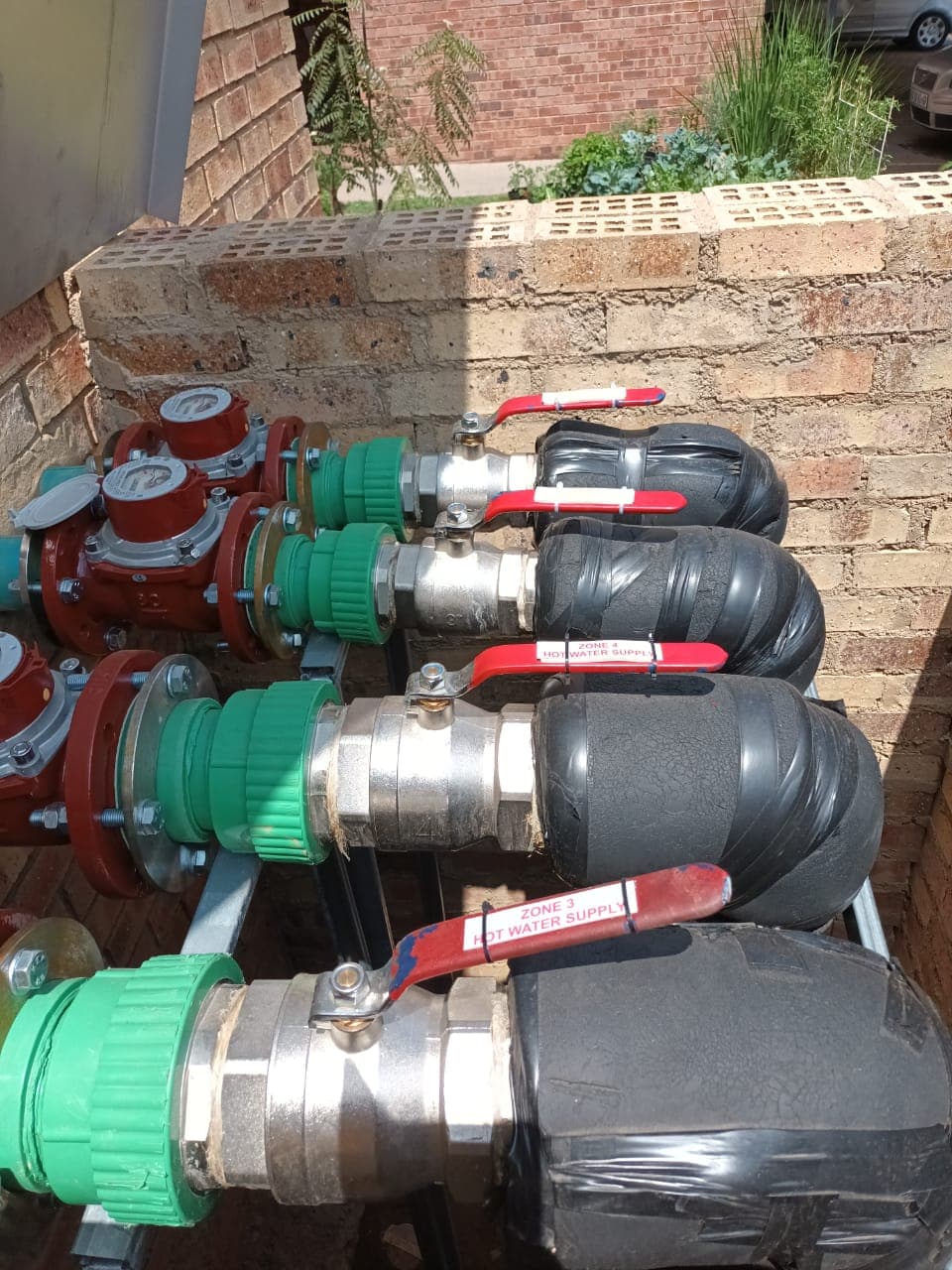
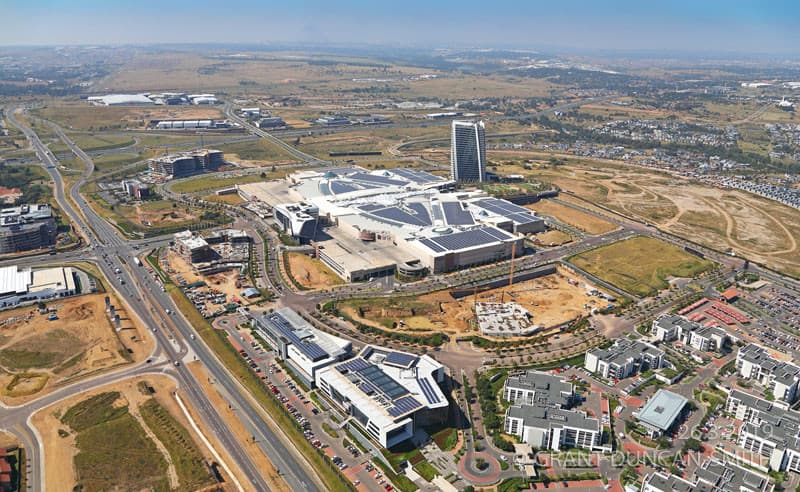
This is the section that makes solar repair a Midrand subject rather than a general one. The City of Johannesburg's planned shutdowns and the node's outage history are well documented in this directory's outage coverage, and the plumbing consequence is specific: when the water comes back after a shutdown, the system's pressure recovers in a surge, and in a solar geyser the manifold joint is the usual weak point — it's where the pressurised solar side meets the tank, and it's the first thing to weep. Add the ridge effect (the higher ground of the node's east side feels pressure changes first, as the Vorna Valley guide describes) and you get the pattern I've seen a hundred times: outage, restoration, manifold weep, "my solar geyser is dead."
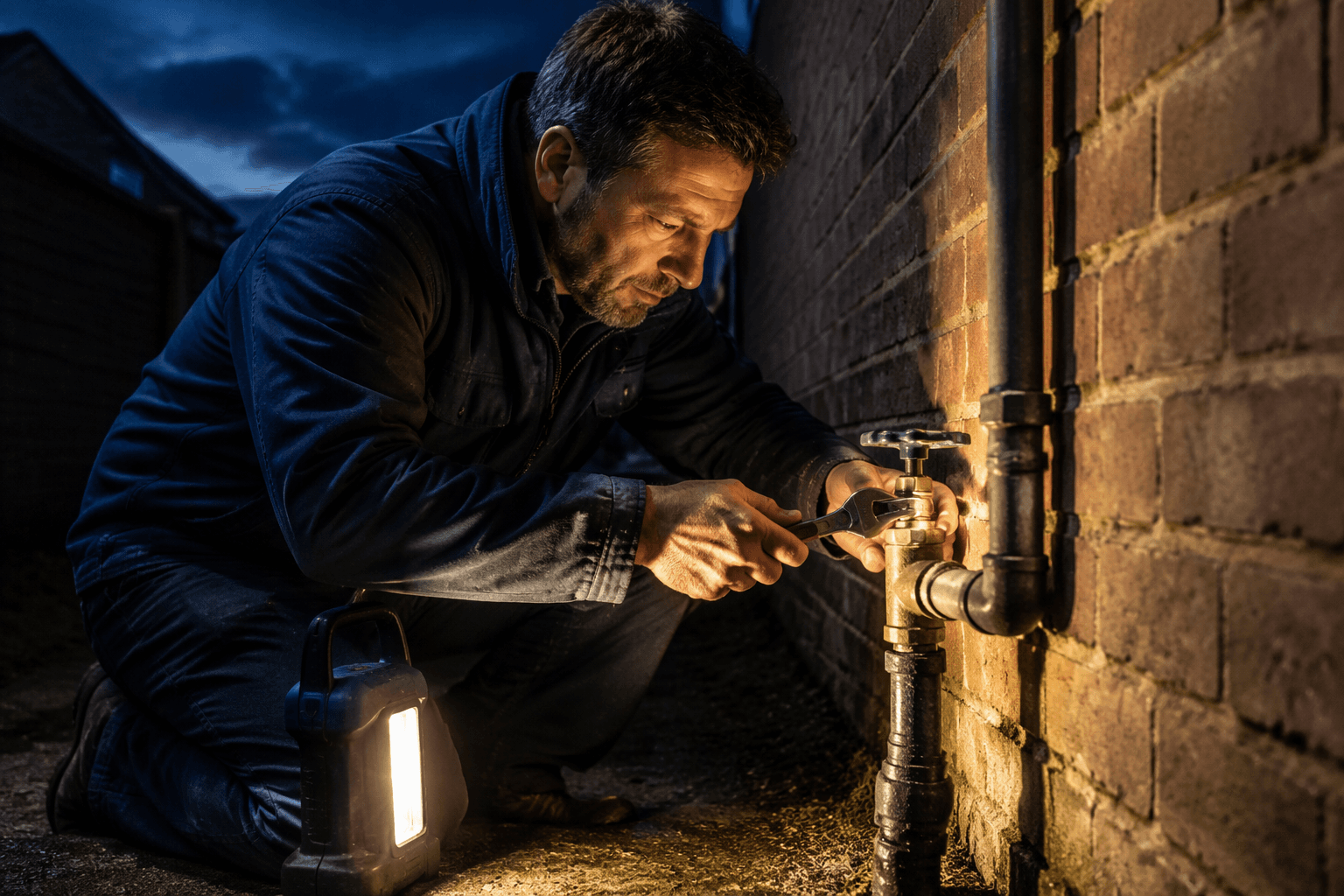
The discipline it requires is short. Before a known shutdown: close the geyser's isolation where fitted, and check the manifold joint is dry (a photo is the record). After restoration: open slowly, watch the joint for the first hour, and if it weeps — that's a manifold-joint call, a van-stock part, one visit, inside the repair band. The providers who name this mechanism in the first message are the ones who've done the outage-season work, and they're the ones worth the night slot.
Repair versus replace: the math that decides
The decision is a number, not a mood:
- Repair: R3,500–R4,500 — element, thermostat, controller, manifold joint, relief valve.
- Replace: R5,000–R15,000 unit + installation (the directory's published replacement band) — or a new install at R4,000–R15,000 if there's no existing unit, in our geyser installation guide.
The rule I hold: a first failure is a repair, almost always. The replacement argument only becomes honest when the unit is 10+ years old and failing in sequence (element, then thermostat, then a joint — each in the repair band, each within a year), because at that point the next failure is a statistical certainty and the cumulative repair total is crossing the replacement number. One more solar-specific point: when the unit is going, the replacement spec should carry the solar side deliberately — the manifold condition, the roof access, and the controller — because a like-for-like swap of a tired solar system just moves the same failure three years forward. The named-part-first rule from the geyser repair guide applies with equal force here: the first opinion should name the part, and the unit suggestion should arrive behind the finding, not instead of it.
Finding a solar-capable provider in Midrand
Solar repair is a subset of geyser work, and the directory makes the subset visible: filter the Midrand plumbers directory by the Geyser Repair tag (and Geyser Installation where the unit's going), keep the providers with published rates — several post the R4,000–R15,000 installation band and the R3,500–R4,500 repair band openly — and read the reviews for geyser language ("replaced the element," "fixed the manifold") rather than adjectives. The comparison method is the one in our plumbers near me guide, and the script for a solar call specifically is the geyser version: name the symptom (weak hot water / constant element / joint weeping after the outage), ask for the layer diagnosis before the price, and get the part named in writing.
The solar geyser is the node's default for a reason — and its repairs are the node's most predictable, because the faults repeat and the bands are published. Diagnose the layer, respect the outage-surge pattern, and the repair column beats the replacement column in every case that starts with one named part.
Sources & references
Further information from local authorities and relevant organisations:
- Midrand (Wikipedia)
- City of Johannesburg Metropolitan Municipality (Wikipedia)
- PIRB - Plumbing Industry Registration Board
- PIRB Public Register (verify a plumber)
- NHBRC - National Home Builders Registration Council
- IOPSA - Institute of Plumbing South Africa
- SABS - South African National Standards (SANS 10400/10256/10257)
- City of Johannesburg
- Information Regulator (POPIA)
- Consumer Protection (CPA, Act 68 of 2008)