






Water leak detection in Blue Hills means locating a hidden leak without destroying your floors, slab or paving — using acoustic correlation, thermal imaging or gas tracing. In 2026, detection in Midrand starts from R600/hr, and most private domestic leaks are found within two hours of a site visit. I'm Mike Fleming — I've been a plumber in Midrand for 18 years, completed 1,670+ jobs and worked on 21+ estate projects — and a rising meter with no visible leak is one of the most common calls I get from Blue Hills. Here's exactly how detection works, what it costs, and how to check for a leak yourself before you pay anyone.
Written by Mike Fleming — 18 years in the plumbing trade, 17 of them working in Midrand. 1,670+ jobs completed, 21+ estate projects. Reviewed and approved by the midrandplumbers.co.za admin team · checked against the PIRB register, SANS 10400‑H and City of Johannesburg water regulations on 8 October 2026. Independently operated directory — no affiliation with listed providers.
Why Blue Hills homes leak — and where
Blue Hills sits on the red sandstone and sandy soils typical of the Midrand area, and that geology shapes how leaks happen. Many homes were built in the 1990s and 2000s on poly or CPVC mains that are now approaching the end of a typical 15–20 year service life. The joints, not the pipe itself, fail first: vibration, minor settlement after heavy rain and root pressure at the boundary wall weaken a poly coupling until it weeps. The three failure points I see most often in Blue Hills are:
- the supply main between the meter pedestal and the slab edge — often under paving or a lawn strip,
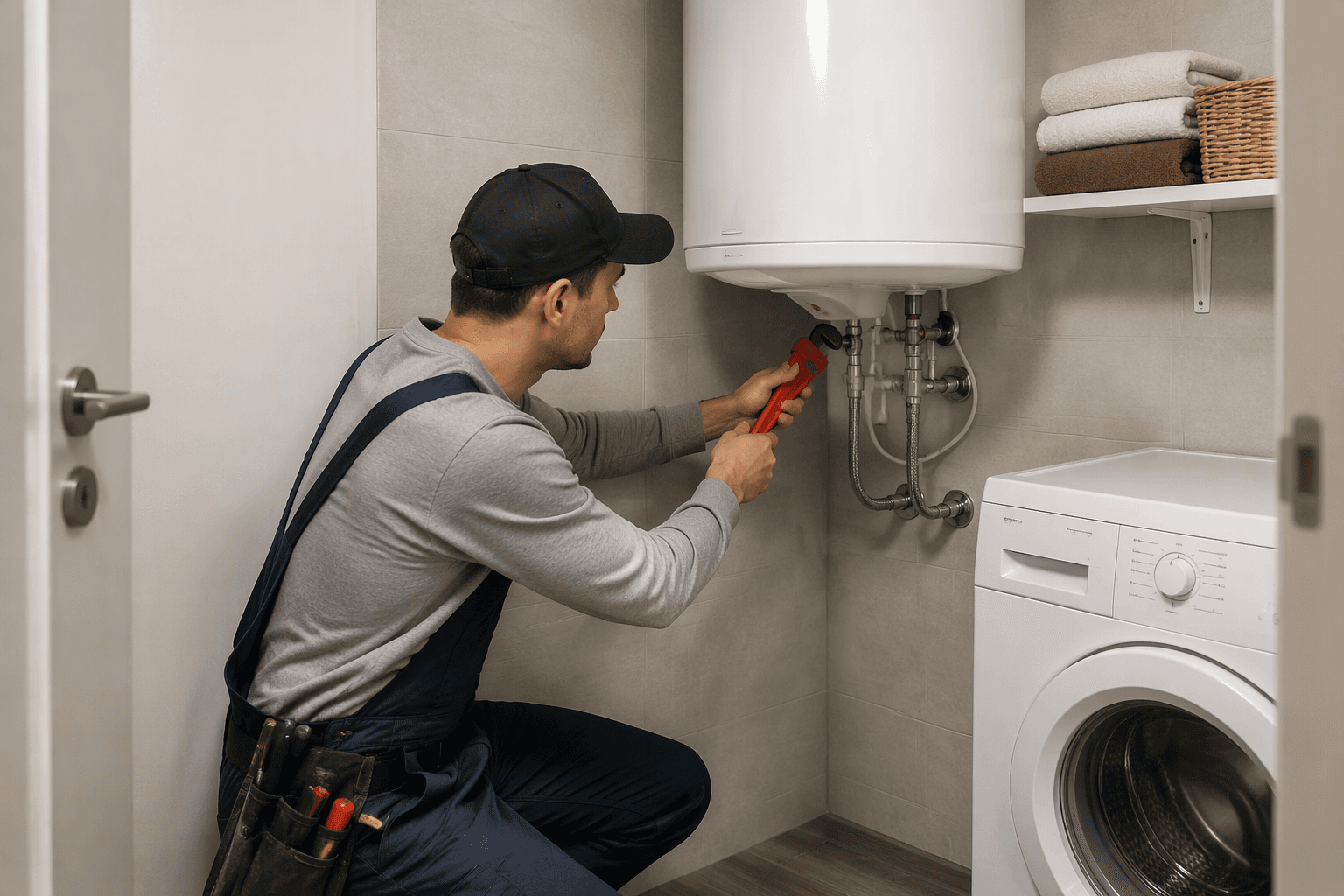
- the geyser manifold and pressure-relief line, usually under the kitchen or bathroom,
- garden irrigation lines, which can waste 2,000+ litres a day and show up as a "mystery" increase on your City of Johannesburg account.
Because the soil here is absorbent, a slow leak can run for months before it ever surfaces — which is exactly the situation where detection equipment earns its fee. If you want the full cost picture for other plumbing work, our plumbing costs in Midrand guide covers the rest of the market rates.
What water leak detection costs in Blue Hills (2026)
The prices below are the 2026 market rates compiled from provider-published prices in our Midrand directory, cross-checked against 18 years of my own job history. Use them as planning figures and get a written quote before any work starts.
| Service | Typical 2026 price (Midrand) |
|---|---|
| Acoustic leak detection | From R600/hr |
| Thermal imaging survey | R800 – R2,500 |
| Gas tracer survey (deep underground) | R1,500 – R4,000 |
| Pressure test | R500 – R1,200 |
| Emergency call-out (after hours) | R600 – R1,300/hr |
| Leak repair (joint or pipe section) | R1,500 – R4,500 |
My rule of thumb: detection at R600–R4,000 is cheap insurance against a blind dig. Tearing up paving, slab or lawn just to "have a look" costs R3,000–R8,000 in replacement work before the leak is even found — and if you dig in the wrong place, you pay twice. I have watched a R4,000 gas-trace job save a client from a R25,000 slab repair, and I have seen the opposite save nothing but a weekend. The detection fee is the cheapest money you will spend on this problem.
The three detection methods, explained plainly
Acoustic correlation — the workhorse
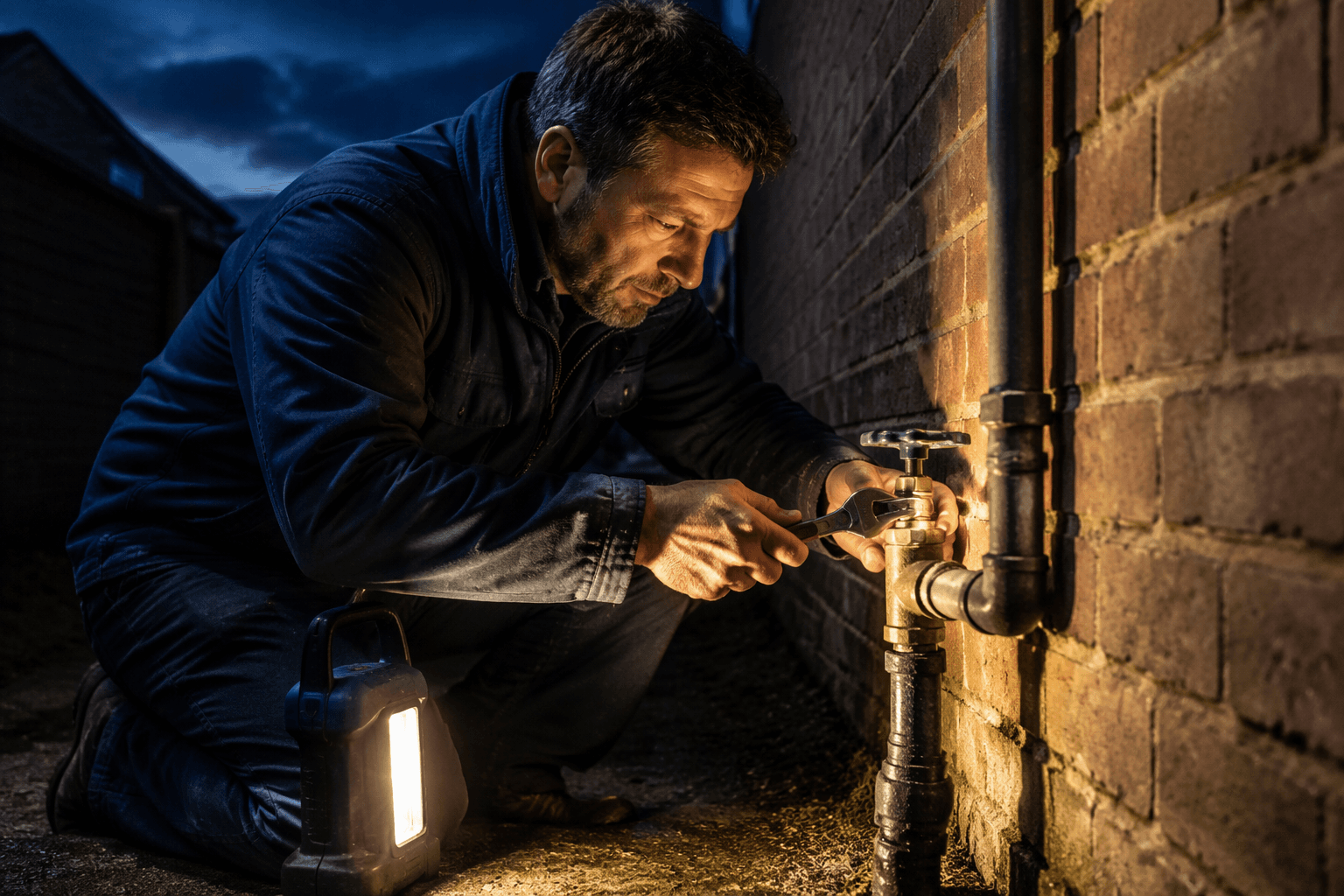
A correlator places sensors on two exposed points (the meter, a stop tap, a test point) and listens for the noise a pressurised leak makes underground. It's fast — 45 to 90 minutes on a typical villa — accurate to within about 30 cm, and best for the supply main and pipes under paving. It needs the water system pressurised and nothing else running.
Thermal imaging — for floors and walls
An infrared camera shows where temperature changes where water is moving. It's ideal for leaks under tiles, along a slab edge or inside walls, and it's completely non-invasive. The catch: it needs a temperature difference. A hot geyser leak is easy to see; a cold supply line weeping into cool soil can be invisible.
Gas tracer — for deep or dry ground
A non-flammable tracer gas is pumped into the system and sniffed out at the surface. It's the most expensive method, but the most reliable for deep mains, pipes under thick concrete, or ground too dry to carry acoustic noise. Estates with long shared mains are where I reach for it first.
On most Blue Hills jobs, acoustic correlation finds the leak, thermal imaging confirms the surface break point, and gas tracer comes out only if the first two come up empty.
Check for a hidden leak yourself — free
- The night meter test (10 minutes). Turn off every tap, geyser and irrigation valve. Read the meter at 22:00 and again at 06:00 before anything is used. If the index moves, water is leaving your property.
- The cistern dye test. A few drops of food colouring in the toilet cistern, left 15 minutes. Colour in the pan without a flush means a leaking flapper — the single most common "leak" I get called out for, and it costs almost nothing to fix.
- Watch your usage. A sudden jump in consumption with no change in household habits is the classic signature of a slow leak.
- Look at the ground. Soft or soggy soil in a dry spell, moss in one paving crack, or a patch of lawn noticeably greener than its neighbours.
If the meter test is positive, restrict use where you can and call detection — every hour a mains leak runs, you're paying the City for water soaking into sandstone. For how your water is metered and billed, see the City of Johannesburg water and sanitation services page.
Case study: 1,900 litres overnight in a Blue Hills villa
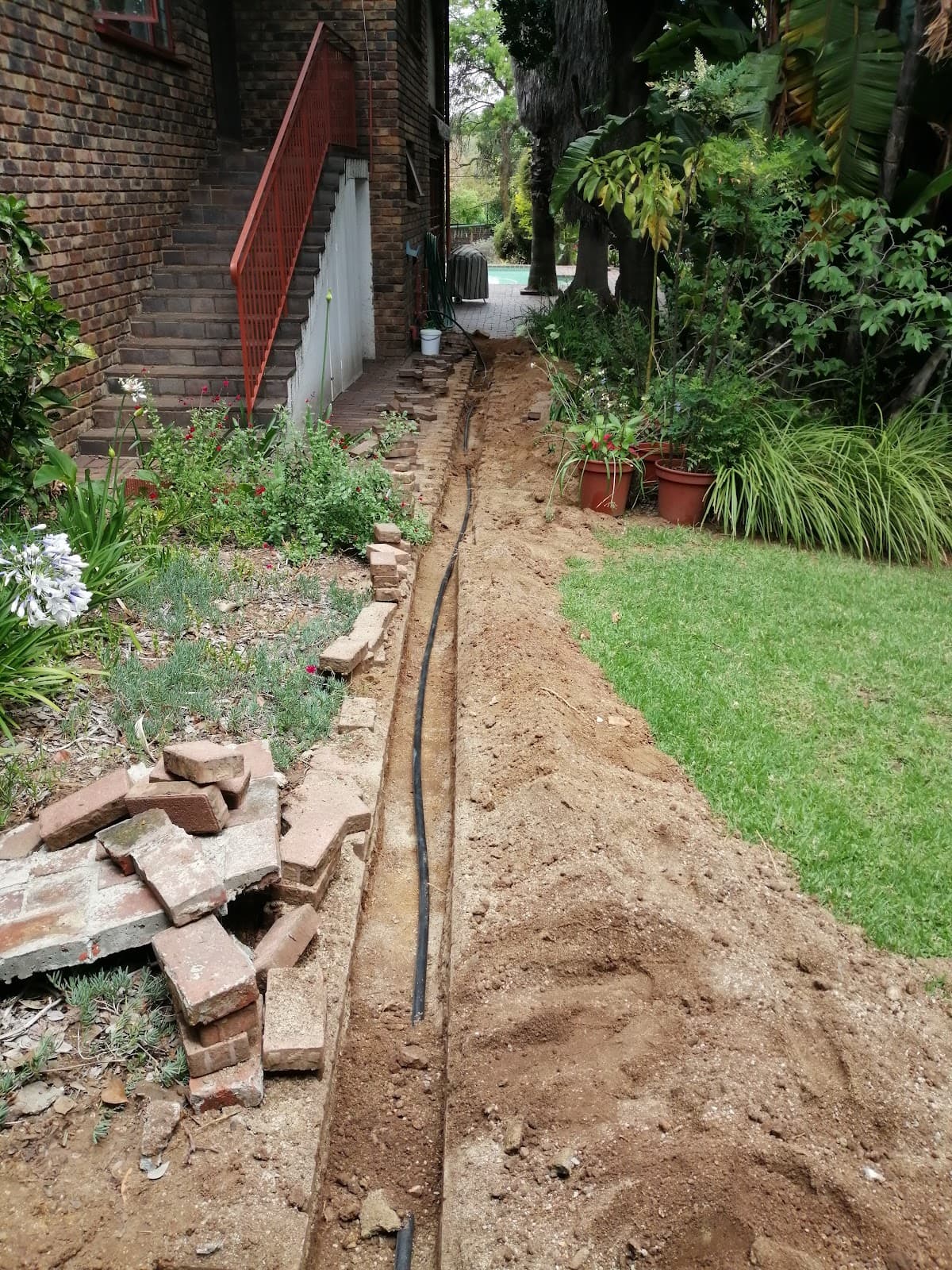
A three-bedroom villa in Blue Hills called me out with a meter showing roughly 1,900 litres used overnight and no visible leak anywhere. The night meter test confirmed continuous flow, so we set up acoustic correlation and isolated a 22 mm poly main weeping at a joint under the paved forecourt — found in 45 minutes and marked to about 30 cm. We lifted one paving section, replaced 1.2 m of main and re-bedded. Total: R2,350, finished in one morning.
The joint had already been weeping for weeks. In Midrand's sandy soil that is a slow void forming under paving — once that gives way, the same repair becomes a slab and re-paving job in the R15,000+ range. This is the pattern in about one in three of my detection calls: the leak is found early enough that the repair is a morning job, not a project.
Who offers leak detection in Blue Hills and Midrand
Leak detection is a specialist service, and not every general plumber carries the equipment. In our Midrand plumbers directory, several providers list leak detection as a published service with transparent rates — for example Magnetic Plumbing Services (Halfway House, from R600/hr), Angel Plumbers, Plumbing Masters SA, Jéan's Plumbing Service and ON TAP Bathroom & Plumbing. My rule for clients: pay the detection fee to a provider who will credit it against the repair if they fix the leak with you. That's standard practice in Midrand, and it removes the "we'll look and then tell you" risk entirely. I also suggest asking one screening question before you book: which kit do they actually carry? A provider who can name the method — "we run an acoustic correlator, we've got the thermal camera, we do gas traces" — is a different animal from one who says "we'll just find it." In eighteen years, that one question has saved me from sending more clients down the wrong path than I can count.
For burst pipes or active flooding, skip the diagnostics and go straight to our emergency plumber guide for Midrand.
Ready to check your property? Request a quote through the directory and you'll get written rates before anyone lifts a tool.