









Quick answer: Plumbers in Midrand cover Midrand itself plus 19 surrounding suburbs - Halfway House, Kyalami, Country View, Ivory Park, Blue Hills, Glen Austin and more - with adjacent Centurion, Sandton and Thembisa covered where operators run there. Published 2026 benchmarks: R400-R900/hour (average around R600), emergency call-outs R600-R1,300/hour, and about a 60-minute response target. Every listing shows its exact service area.
Midrand is not one suburb - it is a corridor of estates, subtowns and industrial nodes straddling the N1 between Centurion and Sandton, roughly halfway between Johannesburg to the south and Pretoria to the north, and the plumbers serving it have organised the same way: most operators base themselves in one cluster and run the rest of the city as a service radius. That has practical consequences for you. It means coverage is genuinely competitive in the centre, honest-but-thinner at the fringes, and different in kind inside the gated estates. This guide maps that coverage suburb by suburb - what each area looks like from a plumbing point of view, which pipes are old enough to matter, and how response times actually play out when the N1 is doing its worst.
How the directory works
This site lists 44 active plumbing businesses, compiled from public sources on 30 September 2026 with the source URL recorded for each record, and every review shown is copied verbatim from the business's public Google profile - never paraphrased or improved. Filter by suburb, service or 24/7 availability, and send one quote request to all matched pros at once: free, consent-based, itemised, compared on one screen. Two things worth knowing before you read on. First, the majority of these operators are mobile service-area businesses rather than shopfront plumbers - they pin to the city and drive to you - so a business's "suburb" in the data is its base, and its service area is the coverage that actually matters. Second, the map view and each listing's service-area line show who covers your street before you ask; the suburb filter is the fast path to the same answer. The rest of this page is the local knowledge layer a phone book cannot give you.
Central Midrand: the N1 corridor
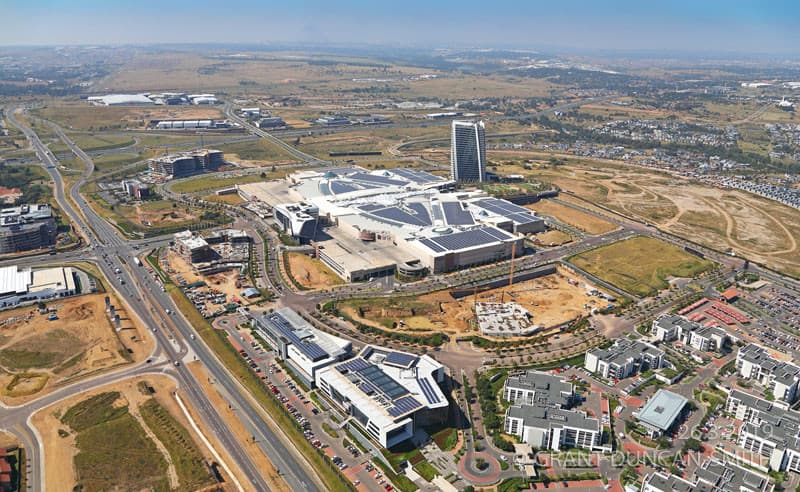
The stretch around the N1 and the Mall of Africa is the densest plumbing market in the area and the fastest response ground in the city: operators based here publish burst-pipe arrival windows of roughly 30 minutes because the radius is small and the demand justifies dedicated on-call crews. The commercial core makes the difference - the Mall of Africa, Gallagher Estate and N1 Business Park run on maintenance contracts and 24/7 cover, and the crews that service them are the same ones answering residential call-outs in the suburbs around them. For standard work, the competition is the city's fiercest here - the published R400-R900/hour band plays out at its midpoints. One suburb west (Blue Hills, Kyalami) or east (Country View, Carlswald, Glen Austin) adds the N1 crossing to the equation, ten to fifteen minutes on the clock at 2 a.m. - so when you shortlist, match the operator's base suburb to yours where you can, and ask for the arrival window to your street in writing, not in principle.
The estate clusters
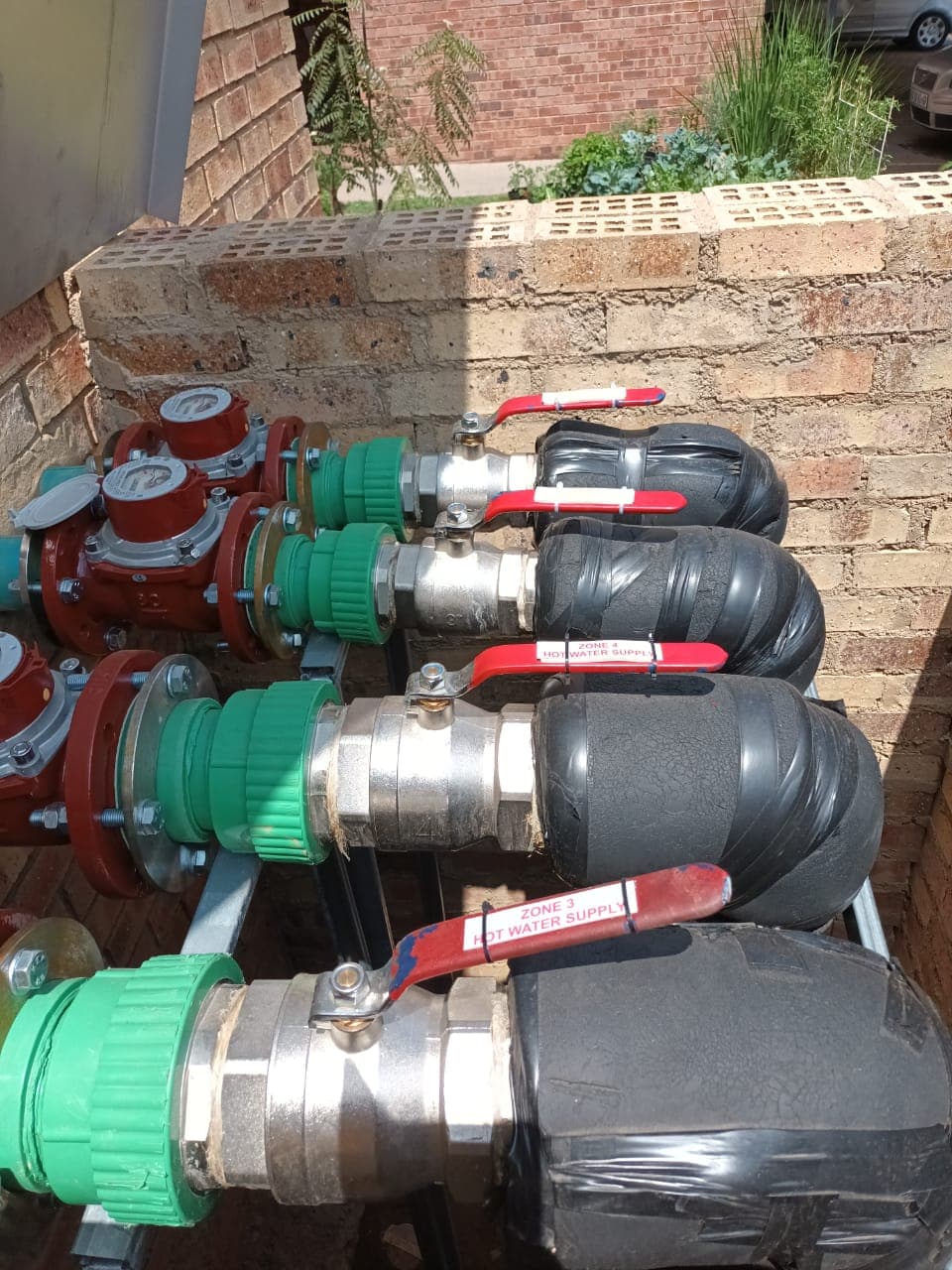
Halfway House, Halfway Gardens and Waterfall City are the archetype of Midrand's estate housing: dense, gated, and run by body corporates with real access rules. Three things define plumbing here. Communal systems - shared sewer lines and geyser plant rooms mean a fair share of call-outs are actually body-corporate jobs, so confirm who commissions the work (you or the estate) before the quote, because it changes who signs, who pays and which warranty applies. Gate logistics - the fastest plumber loses value if they cannot get through the gate at 2 a.m.; established estate operators will ask for your code and unit number with the request, and the warden's phone is what unlocks the communal isolation valve when a main line lets go. Uniform pipework age - estates built in the same phase fail in the same phase, so a street seeing the same flange leaks or drain backups has a pattern worth raising with the body corporate as one problem, not forty. Newer phases skew toward installations and upgrades: geysers fitted to spec, wet-area renovations, the odd "developer left this unconnected" finishing job - all notifiable work, all with a COC that should be in the price.
The older subtowns and family suburbs
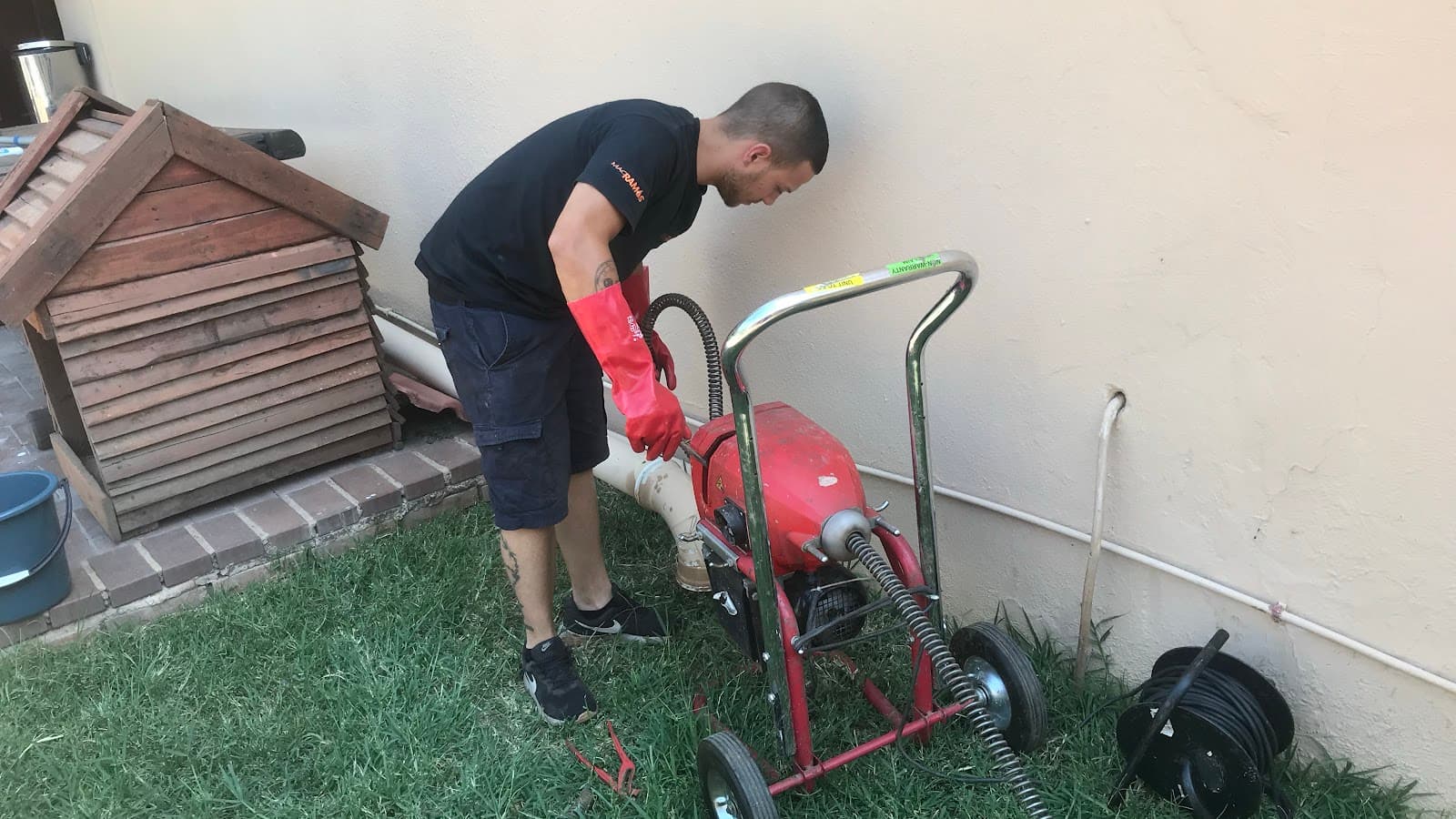
Kyalami and Blue Hills sit on the older side of Midrand's housing stock, and pipe age matters there in a way it does not in 2015-era estates: galvanized and early CPVC lines that have quietly thinned over decades, and clay drains that the city's mature trees have been quietly doing their work on. A drain that "sort of clears" and re-blocks within weeks is usually root incursion - the honest answer is high-pressure jetting plus a CCTV camera inspection, not a third rodding visit, and the camera footage is what makes the next blockage a priced decision instead of a roll of the dice. Vorna Valley, Crowthorne, Noordwyk, Randjesfontein and Randjespark run the everyday profile - taps, cisterns, geyser elements, winter-storm drains - with response times comfortably inside the published ~60-minute target. Two notes for these suburbs: with repair at R3,500-R4,500 and replacement at R5,000-R15,000, a failed element in a geyser well past its design life is often the cheaper long-term path to replacement, done properly with permit and COC; and the best-value annual move is one geyser system check plus one drain flush before storm season. The drain diagnosis guide covers the methods and prices in depth.
The eastern and southern fringes
Country View, Carlswald and Glen Austin form the eastern residential belt toward Centurion; Ivory Park, Clayville and Olifantsfontein are where the housing stock gets genuinely old and the municipal interface matters most - "my drain backs up and my neighbour's does too" more often points to the City of Johannesburg's trunk line than to your invoice, and a good local plumber will say so within ten minutes, which is itself a useful test of the operator. Ebony Park and Rabie Ridge complete the map at the southern fringe, where townhouse shared walls mean a kitchen leak is often a two-property incident the moment water crosses a line: photograph early, isolate fast, message the body corporate. Coverage thins toward the fringes - the operators who list these suburbs in the directory are the ones who actually drive there, and their emergency rates price the commute honestly rather than pretending it does not exist. Several operators also run into adjacent Centurion, Sandton and Thembisa, where the suburb filter shows which Midrand-based crews cover your street - and the distance chip on each card tells you how far the operator really is before you book.
Season, water and the fault calendar
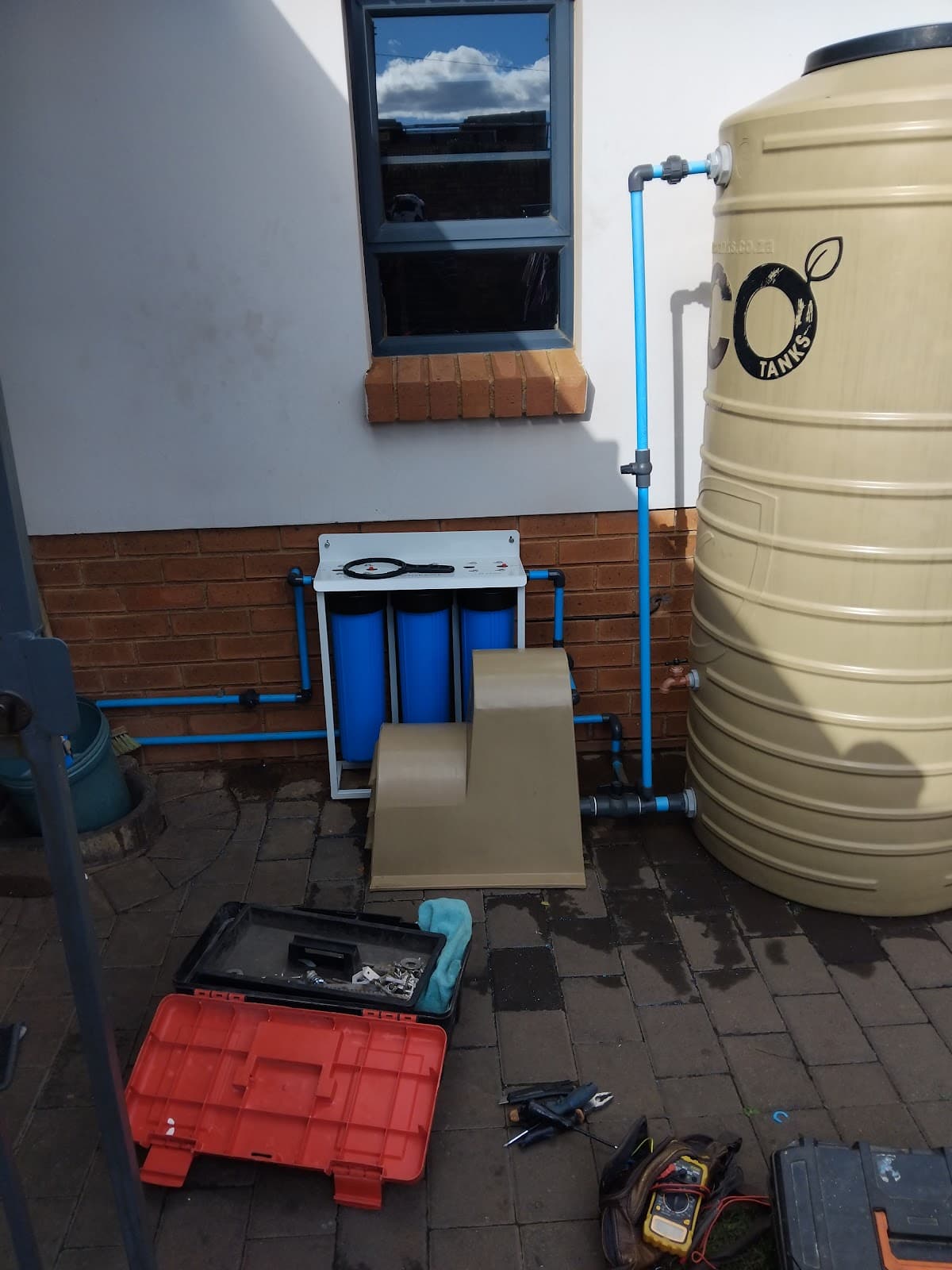
Where you live predicts not just who arrives, but when the faults arrive. Midrand sits at about 1,587 m under a subtropical highland climate, and the plumbing calendar follows it. The summer thunderstorm months - October to March, with January peaking near 140 mm - bring the burst pipes, the drain surges and the garden-irrigation call-outs, and the older suburbs take the worst of it because their drains are the first to overflow. Winter, with minima near 2.5 °C, is when exposed external pipes frost-stress and hot-water demand peaks: geyser faults cluster in the colder months, and load-shedding is the distinctly local wildcard - a geyser that survives a badly managed power cycle may fail its element or thermostat within weeks, which is why the fault guides on this site treat load-shedding as a cause, not a footnote. Water reliability adds a third axis: parts of the area run on boreholes and backup tanks, and Johannesburg Water's credit-control disconnections keep demand for backup work steady year-round. We do not price tank and backup work in this directory because no published benchmark we could verify exists for it - when you request those jobs, expect quotes to be built individually rather than matched to a table.
Cost and compliance, city-wide
Prices do not vary wildly by suburb - it is one market, and the published benchmarks hold city-wide: R400-R900/hour standard (average around R600), R600-R1,300/hour emergency (one operator publishes a flat R350 call-out), R3,500-R4,500 geyser repair, R5,000-R15,000 replacement, R500-R1,500 drain clearing. The line-by-line price guide takes each item apart. What varies by suburb is access (gates add time), pipe age (older suburbs buy more diagnostics) and distance (the fringe pays a commute premium on emergencies). Compliance is uniform - every suburb sits in the City of Johannesburg metropolitan area: minor like-for-like repairs need no permit, notifiable work (geyser replacement, drainage alterations, new points) requires plan approval through the JDA e-building process and a COC from a PIRB-registered plumber, verifiable in two minutes on the public register. For the after-hours scenarios - which operators answer at 2 a.m., and what "fast" means from your side of the N1 - the 24/7 response guide is the companion piece.
Response times, cluster by cluster
The published local benchmark is a 60-minute response target, with burst-pipe arrivals within roughly 30 minutes in central Midrand from the operators who publish that figure; everything else in the table is the honest arithmetic of distance, access and pipe age applied to those two numbers.
| Area cluster | Response picture | What to watch |
|---|---|---|
| Central Midrand (the N1 corridor) | The fastest ground in the city - the published ~30-minute burst-pipe figure comes from this radius | The N1 crossing at peak; match the operator's base to your side of the corridor |
| The estate clusters (Halfway House, Waterfall City, Kyalami) | The published target plus gate time - the warden's answer moves the number ten minutes either way | Communal isolation for main-line leaks; who commissions the job |
| The older subtowns (Vorna Valley, Crowthorne, Randjesfontein, Randjespark) | Comfortably inside the 60-minute target from most bases | Pipe age - root incursion and diagnostic jobs more often than call-outs |
| The eastern and southern fringes (Country View, Ivory Park, Clayville, Olifantsfontein, Ebony Park) | The 60-minute target from local bases; a commute premium on emergencies from central ones | Confirm your street sits in the published service area before you book |
Two rules make the table work. First, ask for the arrival window to your street, in writing - "we cover Midrand" and "we are twenty minutes from your gate" are different statements, and only the second is checkable. Second, use the map view: it shows each operator's base against your location, and the distance chip on the card is the honest version of the response promise before you spend a minute on the conversation.
Building your shortlist for your side of the city
The shortlist that works is built in three passes. Pass one: coverage. The suburb filter narrows the 44 operators to the ones whose published service area includes your street - usually eight to fifteen businesses, enough competition to see the market's honest midpoints without drowning in names. Pass two: the right kind of plumber. The service filter does the matching - geyser work goes to the operators who list geyser repair and replacement (and, for replacement, the ones who handle the notifiable paperwork), drain work to the ones with the camera and the jetter, and the mixed-household job to the full-service operators. The directory's service menus exist for exactly this pass: a geyser specialist, a drain-camera operator and a full-service fitter are all plumbers in Midrand, but only one of them is the right one for your fault. Pass three: the tiebreakers. Within the matched set, the verbatim reviews (read for arrival-time and quote-accuracy patterns, not averages), the published prices (market estimate versus provider price, always labelled) and the registration check (two minutes on the PIRB public register, in writing before the van moves). Three to five operators is the working shortlist for any job above a few hundred rand - the number that makes comparison real without making it a part-time job. Then the comparison itself is one form: describe the job, send it to the shortlist, and the itemised quotes come back together on one screen, with the walking-away right intact at every step.
How this guide was researched
The coverage picture here was assembled by the directory's research team from public sources accessed on 30 September 2026: the 44 listings and their service areas from business websites, Google Business Profile records and directory entries (source URL recorded per record, with most listings cross-checked against at least two sources); suburb coordinates from OpenStreetMap; the municipal and regulatory context from the City of Johannesburg, PIRB, IOPSA, SABS and the National Building Regulations; and the climate figures from the published Midrand reference entry. Where a suburb's coordinates could not be confirmed with confidence, the record says so rather than guessing. The directory is independently operated - no affiliation with any listed provider - and the pay-per-lead model means no one can buy their way into the coverage map.
Sources & references
Accessed 30 September 2026.
- The Midrand reference entry (geography, climate, development)
- The City of Johannesburg metropolitan municipality record
- Midrand plumber listings with suburb detail (Infoisinfo)
- Published Midrand job prices (ProCompare)
- OpenStreetMap place search (suburb coordinates)
- City of Johannesburg municipal services
- The PIRB public register (registration checks)
Use the suburb filter to shortlist the operators who list your specific area, check their published prices and verbatim reviews, then send one quote request to all of them at once. That is how the plumbers in Midrand are actually chosen by people who have done this before - and the arrival window you are promised should be the one measured from their base suburb to your gate, in writing.